SMILE’s SXI, UVI, MAG and LIA begin magnetosphere sensing
ESA–CAS joint suite: soft X-ray and UV imagers plus boom magnetometer and light ion analyser—science ops after commissioning, with SXI stray-light tuning still in work.
SMILEESACASSXIUVIMagnetometerLIAMagnetosphereSpace weatherInstrumentsNSSCSoft X-raySpace tech
ESA and the Chinese Academy of Sciences cleared SMILE for science operations after commissioning, putting the instrument suite—not the ceremony—at the centre of the story.
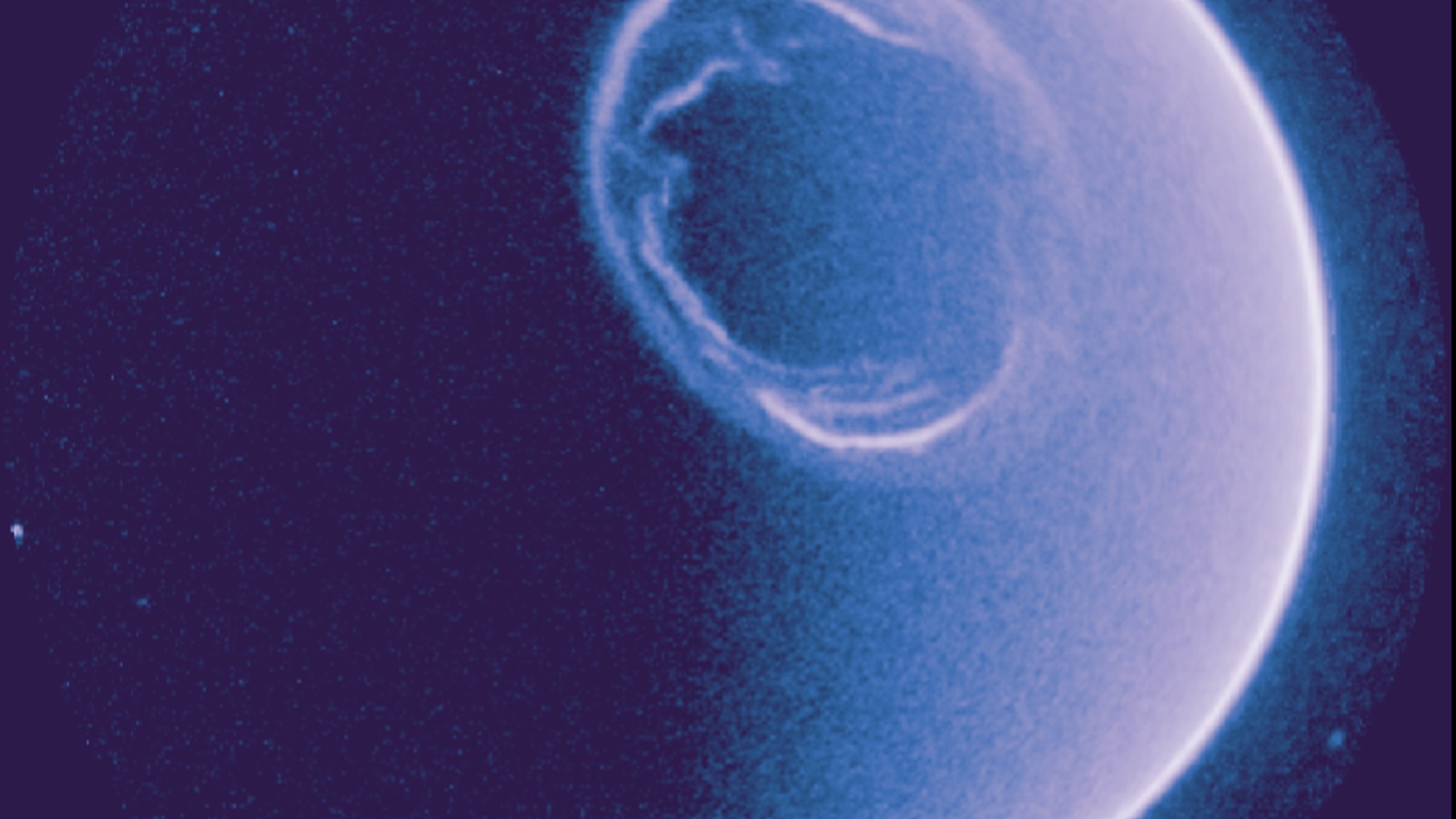
Four instruments work as one magnetosphere toolkit. The Soft X-ray Imager (SXI, University of Leicester / ESA) images soft X-rays from solar-wind charge exchange at the magnetopause and cusps; early Earth-pointed data showed excess stray light, so teams are tuning settings and software while northern winter geometry helps. The Ultraviolet Imager (UVI, NSSC/CAS with ESA ESTEC) captures the northern auroral oval—ESA says continuous windows up to about 45 hours, the first full-ring UV aurora camera since 2008—with early footage of a substorm. The Magnetometer (MAG, NSSC/CAS) on a deployable boom measures solar-wind and magnetospheric fields at better than 0.1 nT after calibration. The Light Ion Analyser (LIA, NSSC/CAS) samples ion energy, direction, and flux (reported spectra spanning tens of eV to tens of keV) to derive density, velocity, and temperature for context on the imagers.
Orbit and division of labour matter for the tech. After a 19 May 2026 Vega-C launch from Kourou, SMILE reached a highly elliptical science orbit (NSSC cites roughly 5,120 × 120,900 km) on 20 June; ESA provides the payload module and SXI, CAS the platform plus MAG/LIA and shares UVI, with joint ops. Declared ready on 23 September (ESA) / science-phase release 30 September (NSSC), the mission is built to combine remote sensing and in-situ plasma data for space-weather physics.
Voyage’s angle: instrument performance, stray-light mitigation on SXI, and whether MAG/LIA cross-calibrate cleanly with UVI/SXI images—sensor engineering for magnetosphere mapping.
Desk note from public releases. Sources: